

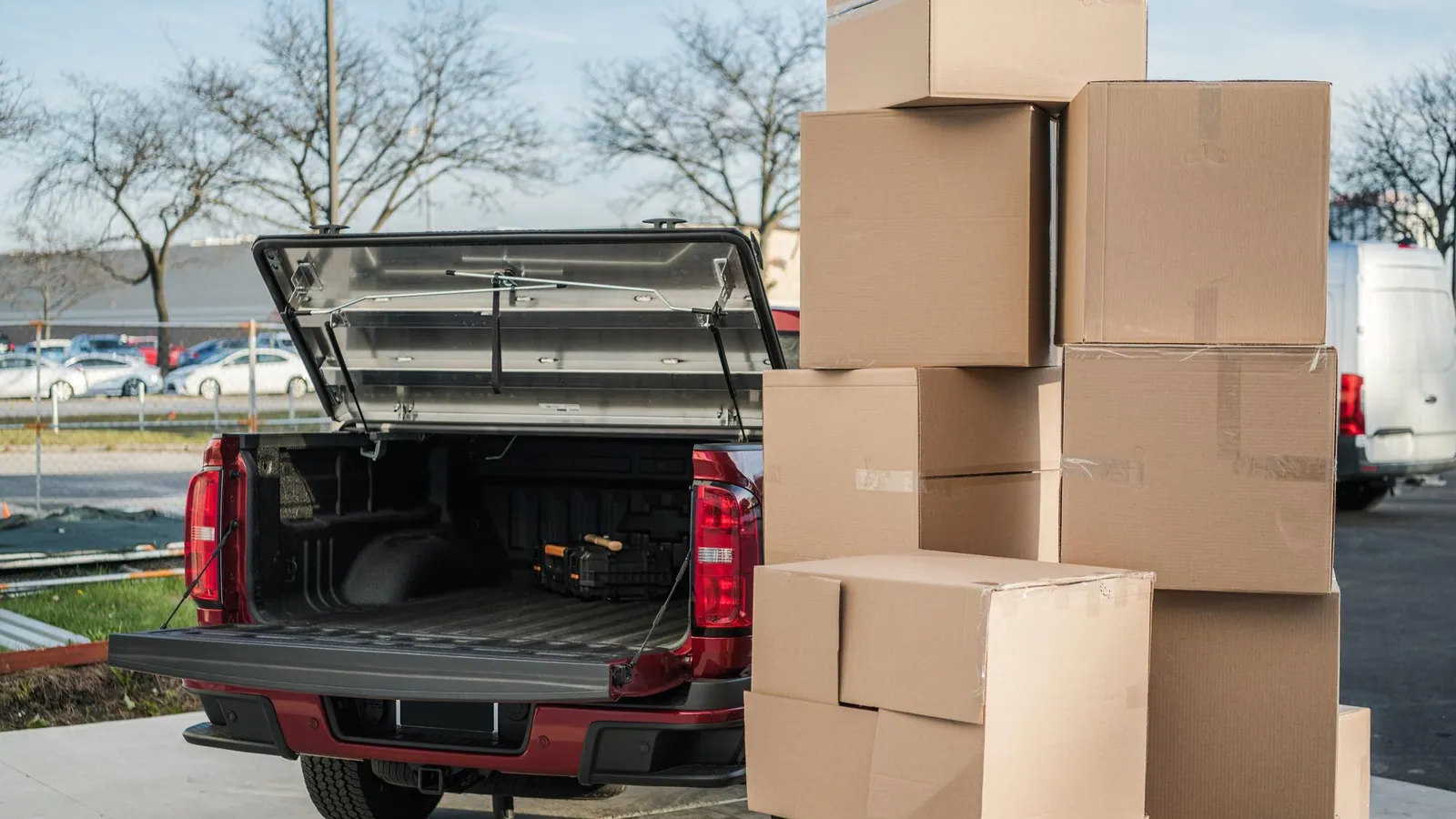
Quick answer: The main benefits of a hard folding tonneau cover are a sturdier lid, stronger resistance to casual theft and a more solid barrier against rain and snow than a soft vinyl cover. It also lets you open part of the bed without removing the whole cover. A soft cover can still be the right pick if you want a lighter, simpler setup or full bed access, so the best choice depends on how you use your truck.
We get this question often from pickup owners in Westchester and Putnam counties. Below we walk through the real differences, where a soft cover wins, and the five things we check before we recommend either one.
What's the difference between a hard folding and a soft tonneau cover?
A hard folding cover uses rigid panels that fold on hinges. Materials vary by brand and model, so it's worth asking what a specific cover is made from before you buy. The panels sit on top of your bed rails and usually lock in some way.
A soft cover uses vinyl or a similar flexible fabric stretched over a frame or rolled onto a rail. Soft covers come in two common styles: roll-up and tri-fold. They're lighter and often simpler in construction.
Both types protect cargo and keep the bed tidy. The difference shows up in how they handle security, weather, access and day-to-day use.
Is a hard folding cover more secure?
In general, yes. A rigid panel is harder to get through than fabric, which can be cut with a blade. For a truck that carries tools, sports gear or luggage, that extra resistance matters to a lot of owners.
That said, no tonneau cover makes a bed theft-proof, and we wouldn't tell you otherwise. A cover is one layer of protection. It works best alongside good habits, like keeping valuables out of plain view and locking the cab and tailgate.
How a cover latches, and whether it works with your tailgate lock, varies by product. When you compare covers, ask each time how it latches and what locks it. We're happy to show you the options in person.

How do hard folding covers handle weather?
Rigid panels with perimeter seals generally hold up well against rain, snow and road spray. They also don't sag, flap or stretch the way a soft cover can over time. That can matter on the highway and through a New York winter.
We want to be straightforward here. Water resistance depends on the cover design, the quality of the installation and your truck's bed rails. Most covers are designed to keep out the bulk of the weather, but you shouldn't assume any cover is perfectly sealed. If you carry items that must stay completely dry, ask us how a particular cover handles drainage and sealing.
For a broader look at how covers shield a bed from the elements, our page on how tonneau covers protect your truck bed and cargo from weather covers the basics.
What are the other practical benefits of a hard folding cover?
Beyond security and weather, owners usually point to five everyday advantages:
- Solid top surface. Rigid panels are generally better at holding their shape, and some owners like a flat, firm surface over the bed. Check the manufacturer's load rating before you set anything heavy on any cover.
- Partial access. You can often fold back one section to reach items near the cab or load something shorter, while the rest of the bed stays covered.
- Clean look. Hard covers tend to sit flat and follow the lines of the truck.
- Durability. Rigid panels don't stretch or sag, though wear still depends on the product and how you use it.
- Cleaning. A smooth rigid surface is generally simple to wipe down.
Cargo placement matters for efficiency, too. Gear carried on a roof rack adds wind resistance, which can hurt fuel economy. Keeping loads down in a covered bed is one way owners avoid that, though we can't promise a specific mileage change from any cover.
If you want a fuller side-by-side, we put one together in Hard vs Soft Tonneau Covers: Which Is Right for Your Truck?
When does a soft cover make more sense?
Hard folding covers aren't automatically the better choice for everyone. A soft cover can be the smarter fit in four situations:
- You need to clear the whole bed often. A roll-up soft cover can be rolled up to the cab so the full bed is open, which is handy for tall or bulky loads.
- You want something lighter. Soft covers are generally lighter to handle, which can make removal easier.
- You want a simpler, more budget-conscious option. Soft covers are commonly the more affordable route, though we can't quote a price without knowing the cover and your truck.
- Security is a lower priority. If you mostly carry light, low-value items, fabric may be enough.
So the question is less about which type is better and more about which type matches how you use the bed.
Hard folding vs soft at a glance
This table shows general tendencies across six categories. Individual products differ, so treat it as a starting point.
| What you care about | Hard folding cover | Soft cover |
|---|---|---|
| Resistance to forced entry | Generally stronger, since panels are rigid | Generally weaker, since fabric can be cut |
| Weather protection | Rigid panels with seals, quality varies by model | Can work well, but fabric may stretch or wear over time |
| Access to the bed | Partial or fuller access depending on how it folds | Roll-up styles can clear the whole bed |
| Weight and handling | Generally heavier | Generally lighter |
| Appearance | Flat, structured look | Softer look, can sag if not tensioned well |
| Cost | Generally higher | Generally lower |
The fit of the cover to your specific truck, bed length and any bed accessories matters more than the category itself.
What do we check before recommending a cover?
This is where buying locally helps. Online listings can leave you guessing about fitment, and a cover that's almost right for your truck isn't right. We're a parts and accessories super store with installation services, and we're much broader in what we offer than a shop that only sells covers. Our team brings real product knowledge, and our installation technicians are experienced with fitting covers to different trucks.
When you come in, these are the five things we talk through:
- Your truck's year, make, model and bed length, so the cover is matched to the right fit.
- Bed accessories, such as a toolbox, bed liner, rail caps or rack, which can affect which covers will work.
- How you use the bed, whether that's work gear, groceries, camping equipment or tall loads.
- Whether you tow, since a cover and a trailer setup should work together. If you're planning both, we can look at them as one setup.
- How you want it installed, because the mounting method depends on the cover and truck.
We've served Westchester and Putnam counties for 35+ years, and we'd rather help you pick the right cover than sell you the wrong one. Customer service is a big part of how we work, from the first question to the finished install.
If you're still comparing options and shopping around, our Truck Bed Covers Near Me: Westchester & Putnam Guide explains what to look for in a local shop.
How do you choose between a hard folding and a soft cover?
Here's a simple way to decide:
- Choose a hard folding cover if you want more security and a sturdier lid, you carry gear you want out of sight, and you don't need the entire bed open all the time.
- Choose a soft cover if you often haul tall items, want an easier cover to handle, or prefer a lower-cost setup.
- Ask us if you're somewhere in between. Many owners are, and a short conversation about your truck usually settles it.
To see how the installation side works, you can read about premium truck bed covers and expert installation for more detail on what to expect.
Stop by our Yorktown Heights store and we'll look at your truck with you, or start with our tonneau cover installation page.